Gas Line Repair Kyle TX
Waterleaf gas line repair

Gas Line Repair in Waterleaf, Kyle, TX

Waterleaf sits close to the I-35 corridor on Kyle's growing edge — a residential neighborhood where commuter convenience meets established Texas suburbia. Homes here span early phases with mature landscaping and newer infill streets, and their gas systems span the same range: original lines sized for yesterday's appliances, plus new runs for grills, outdoor kitchens, and upgraded laundry rooms. We provide gas line repair, installation, leak detection, and inspection across Waterleaf — careful, code-aware work planned around Blackland Prairie clay, the corridor's growth, and the way this neighborhood actually lives.

Kyle TX
Based in Kyle, Texas
Gas only
Dedicated line specialists
Safety-first work
Serving Waterleaf homes

About this area

Why gas line repair in Waterleaf matters

Why we serve here

Waterleaf's story is the I-35 corridor's story: steady growth, one phase at a time. The earliest streets have settled in — mature trees, established lawns, and gas systems installed when the neighborhood was new. The newer infill sections are still finding their footing, with fresh grading consolidating under new sod. Under all of it lies Blackland Prairie clay, the expansive soil that swells in wet weather and shrinks in drought, working on buried gas lines and meter risers year after year. We serve Waterleaf because corridor neighborhoods like this one reward a contractor who reads both the house and the ground — checking original lines against today's appliance loads, and planning every buried run for soil that never sits still.

Corridor convenience, clay ground, and gas lines that respect both

Waterleaf's geology is pure Blackland Prairie: deep, heavy clay with no rock to stop a trench but plenty of movement to punish one. When the clay is wet it swells and grips buried pipe; in drought it shrinks, cracks, and lets go — and the cycle repeats every year. That heaving works on gas service lines, the joints where buried pipe turns up into the house, and meter risers that gradually lean or shift. A gas line in Waterleaf is rarely a set-and-forget affair: it needs proper depth, proper bedding, and joints that tolerate a ground that breathes. Repair and installation work here has to be planned around that movement from the start.

The neighborhood's housing tells the same story in a different way. The early phases carry original gas systems — pipe sized for the builder's standard appliance package, now feeding upgraded ranges, gas dryers, and backyard features the original plan never imagined. The newer infill streets have fresh installations, but fresh grading that is still consolidating, which stresses new joints in the first years. The early-phase lines need honest assessment against today's loads and watchful inspection for soil-stressed joints; the newer systems need correct sizing from day one and protection where landscaping will grow over them. Both reward a technician who understands what corridor growth and Blackland clay do to a gas system over time.

Drainage is part of Waterleaf's reality too. Heavy Central Texas downpours sheet across clay that drains slowly, pooling around foundations and meter assemblies and eroding cover over shallow buried runs. Low spots in a yard can hold water against a gas riser for days after a storm, and repeated saturation accelerates corrosion on older steel pipe. After major storm seasons, buried gas lines deserve a careful look: shifting saturated soil stresses joints, and any run that lost cover to erosion needs it restored before mowers and edgers find it.

Then there is the way Waterleaf lives. This is a commuter neighborhood — families out the door early, back late, with gas systems working hard in the margins: morning showers, evening cooking, weekend laundry marathons, and backyard grills on the weekends. A system under that kind of daily load shows its weak points faster than one in a quiet house. Small inefficiencies — a valve not opening fully, a line slightly undersized for the new range — turn into daily annoyances and wasted gas. For busy households, a periodic professional inspection is the practical way to keep the system safe and efficient without thinking about it.

Access is the final local wrinkle. Waterleaf's established phases have mature trees, fenced yards, and landscaping that has had years to grow over buried runs — while the newer streets are still active with construction traffic and fresh grading. Equipment has to be right-sized for tight side yards, materials staged without tearing up lawns, and excavation planned so a mature oak's roots or a new sod lawn don't turn a straightforward repair into a restoration project. We come to Waterleaf ready for all of it: the clay, the corridor growth, and the mix of early-phase and infill homes that make this neighborhood what it is.
Services available

Gas line repair services in Waterleaf

In Waterleaf, gas work has to answer to expansive clay, corridor growth, and a housing stock that ranges from early phases with original systems to brand-new infill builds. Our repair, installation, and leak detection services are planned around those realities — honest assessment of older lines against today's loads, careful buried work in shifting ground, and tidy, code-aware work on new additions.

How we work locally

How gas line repair is executed in Waterleaf

Challenge: Original lines sized for smaller appliance loads

Waterleaf's early phases were built around standard appliance packages. Years later those homes run pro-style ranges, gas dryers, and backyard features — all drawing through pipe sized for a simpler time. The result is weak burners, slow dryers, and systems running at their limit.

Solution: We calculate the total connected load against the existing pipe capacity, then upsize the run or add a dedicated branch so every appliance gets full pressure. The system is pressure-tested end to end before it's returned to service.

Challenge: Clay soil and mature landscaping over buried runs

Established Waterleaf yards have had years for roots, beds, and irrigation to grow over buried gas lines — while the clay underneath keeps heaving with every wet-dry cycle. Joints loosen, risers shift, and cover thins where erosion and edgers have done their work.

Solution: We inspect buried runs, risers, and accessible joints for stress and wear, restore proper cover and protection where it's been lost, and renew compromised sections with correct depth and bedding. Where landscaping has grown over a run, we map it clearly so the next project doesn't find it with a shovel.

Where we work

Near the I-35 frontageEstablished phasesNewer infill streetsPark and greenbelt edgesQuiet cul-de-sacsCorridor-facing blocks

Where we work

Waterleaf

Kyle, TX 78645

Hays County, Texas

Extract Directions

Case files

Illustrative examples of the kind of gas line work Waterleaf's housing mix and clay soil typically call for. Every property is different; these scenarios show how we approach the common patterns.

Illustrative scenario: 1

Early phase — original line meets new appliances

Challenge

A homeowner in one of Waterleaf's early phases noticed the new range's burners ran weak and the dryer took two cycles. The home's original gas line was sized for the builder's standard package — not for the upgraded appliances the family had installed over the years.

Execution

We calculated the total connected load and confirmed the existing run was undersized. A new dedicated branch was run for the laundry and kitchen upgrades, routed cleanly with proper supports, and the entire system was pressure-tested before anything was reconnected.

Impact

Every burner fired at full strength, the dryer finished on one cycle, and the system held its pressure test — the original line now comfortably within its capacity.

Illustrative scenario: 2

Mature yard — landscaping meets a buried line

Challenge

A homeowner planning new planting beds called us first — smart, because years of clay movement had already shifted the buried gas service closer to the surface along one stretch, right where the new beds were going.

Execution

We mapped the buried run with detection equipment, marked its path clearly, and renewed one joint that soil movement had stressed. The planting plan was adjusted around the marked line, and the system was verified tight.

Impact

The beds went in without incident, the gas system was verified tight, and the homeowner now knows exactly where the buried line runs for every future project.

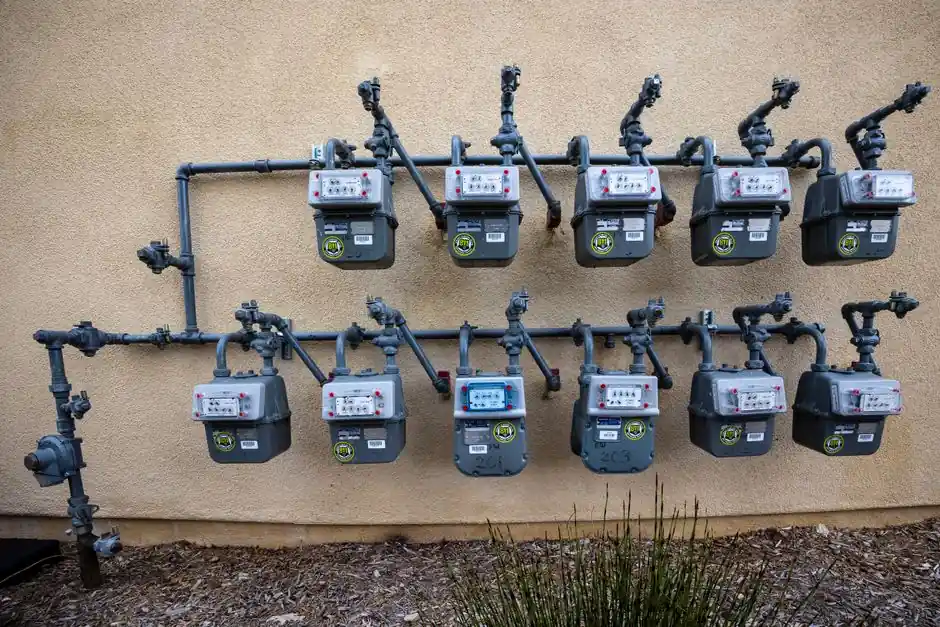
Gas meters installed on the exterior wall of a Waterleaf home in Kyle, Texas.
Our focus
Our focus

What gas line work in Waterleaf involves

Gas work shaped by corridor growth and clay

Our work in Waterleaf keeps coming back to the same fundamentals: size the line for the appliances the family actually has, respect what Blackland clay does to buried pipe, and map every run before the next landscaping project. We have upsized original lines choked by years of appliance upgrades, traced leaks to joints loosened by soil movement, renewed outdoor branches worn by weather and yard equipment, and routed new grill and fire-pit lines with proper depth and protection. From early phases with original systems to new infill builds, every property gets the approach its age and its ground demand: find the real problem, fix it to code, pressure-test it, and leave the system safer than we found it.

Gas only
Dedicated gas line specialists

Local questions

How do I know if my Waterleaf home has a gas leak?

The usual signs: a rotten-egg odor near the meter or appliances, hissing near a connection, dead vegetation along the buried line's path, or a gas bill that climbs without a change in usage. If you suspect a leak, avoid anything that could spark and have the system inspected with electronic detection equipment.

My Waterleaf home is in an early phase — should I worry about the original gas lines?

Early-phase homes deserve a professional look. Original lines may be undersized for today's appliance loads, and years of clay-soil movement can stress joints and risers. An inspection with pressure testing tells you exactly where the system stands — and whether an upsize or a simple repair is the right call.

Can you run a gas line to my backyard grill or fire pit?

Yes. We install dedicated gas branches for grills, outdoor kitchens, and fire pits across Waterleaf — sized for the appliance load, routed underground with proper depth and protection, and pressure-tested before anything is connected. Permits and inspections are coordinated wherever the scope requires them.

Who do I call before digging in my Waterleaf yard?

Call Texas811 before any digging project — landscaping, irrigation, fence posts, or new gas line work. Buried-utility operators mark their lines first, and the service is free. It is the required first step before breaking ground, and the simplest way to avoid turning a weekend project into a gas leak.

Safety & code compliance

Trust and compliance

Gas work in Waterleaf has to satisfy the same safety codes as anywhere else in Texas — plus the practical demands of expansive clay and a neighborhood that keeps growing. We approach every job with current code requirements in mind, pull municipal permits and coordinate inspections where the scope requires it, and document our work clearly. Gas utilities in Texas fall under the jurisdiction of the Texas Railroad Commission, and we follow its pipeline safety expectations on every buried run. Before any digging, we call Texas811. No shortcuts in clay soil, no guesswork on older systems — just careful, explainable work.

Work permits Pulled where the city requires them
Texas Railroad Commission State jurisdiction over gas utilities
Inspections & testing Pressure tests and code checks before service

Areas we cover

When To Call

Signs you need gas line repair in Waterleaf

In Waterleaf, gas line trouble often hides behind everyday suburbia — a joint loosened by clay movement, a line nicked during a landscaping project, an original run stretched thin by years of appliance upgrades. If you notice any of the following, get a professional inspection before the problem grows.

1. Gas odor around the house or yard

The rotten-egg smell added to natural gas is the clearest warning there is. Check around the meter, along the buried line's path, and near outdoor gas features — and treat any smell as urgent, especially if it's strong or growing.

2. Hissing near lines, meters, or connections

A faint hiss at a joint, valve, or meter connection can mean gas is escaping under pressure. Don't try to tighten anything yourself — gas connections need proper tools and testing to be made safe.

3. Dead or stressed vegetation in a distinct line

A strip of dying grass tracing the path of a buried line — especially in an otherwise healthy Waterleaf lawn — can indicate a slow underground leak. Clay soil stressed by seasonal movement is the usual culprit behind the loosened joint.

4. Appliances behaving oddly

Burners with weak or yellow flames, a dryer taking two cycles, or a grill that won't hold heat can all point to pressure or supply problems — often an original line undersized for the appliances it now feeds.

5. After heavy storms and soil erosion

If a big storm left soil pulling away from your meter riser or erosion gullies crossing the yard, have the gas system inspected. Saturated, shifting clay stresses buried joints, and any run that lost cover needs it restored.

6. Exposed pipe or a leaning meter riser

Clay movement and erosion can leave a meter riser leaning or expose a shallow buried run. If you spot pipe emerging from the soil or a meter that has shifted, keep clear and arrange an inspection promptly.

Local Problem Patterns

Common gas line repair problems in Waterleaf

Waterleaf's combination of expansive clay, corridor growth, and a wide span of home ages produces a recognizable set of gas line issues. Here are the patterns we see most often in the neighborhood.

Undersized original lines in early phases

Why it happens here

Early-phase Waterleaf homes were piped for the builder's standard appliance package. Years of upgrades — bigger ranges, gas dryers, outdoor kitchens — now draw through pipe that was never sized for the load, leaving appliances starved and systems strained.

Our approach

We calculate total connected load, upsize the run or add a dedicated branch, and pressure-test the whole system so every appliance gets full, steady gas.

Joints loosened by clay movement

Why it happens here

Blackland clay swells and shrinks every year, and that heaving works on buried joints and meter risers — gradually loosening connections even in homes that aren't old by any normal measure.

Our approach

We check buried runs and risers for stress with detection equipment, renew compromised joints with proper depth and bedding, and plan supports that tolerate the ground's movement.

Storm erosion exposing buried runs

Why it happens here

Central Texas downpours sheet across slow-draining clay, carving gullies and washing cover off shallow buried runs. Exposed pipe invites damage from mowers, edgers, and weather.

Our approach

We restore proper cover depth and protection where erosion has exposed pipe, and recommend a joint-by-joint check after major storm seasons on properties with drainage issues.

Landscaping and irrigation strikes

Why it happens here

Waterleaf yards are constantly evolving — new beds, irrigation trenches, fence lines — and buried gas lines don't always sit where you'd guess. A single shovel or trencher strike can nick or break a line in seconds.

Our approach

We locate the damage with detection equipment, repair the section to code, and verify the full run is tight. Before your next yard project, call Texas811 so buried lines get marked first.

Year-Round Coverage

How seasons affect gas line repair in Waterleaf

Central Texas weather swings from spring downpours to summer heat to the occasional hard freeze, and each season presses on Waterleaf gas systems in its own way — with the clay soil amplifying every swing.

Spring

Spring storms saturate Waterleaf's clay, swelling the ground around buried lines and shifting fresh fill in newer sections. Runoff sheets across slow-draining lawns, eroding cover over shallow runs and pulling soil away from meter risers.

Tip

After heavy storm seasons, walk your property for newly exposed pipe, leaning risers, or fresh erosion gullies crossing the buried line's path.

Summer

Summer is peak backyard season in Waterleaf — grills, outdoor kitchens, and fire pits all drawing gas while irrigation and landscaping projects break ground nearby. Heat also bakes the clay into cracked, shrunken ground that shifts buried joints.

Tip

Before heavy summer use, have outdoor gas features and their supply lines checked — and call Texas811 before any digging project in the yard.

Fall

Fall is Waterleaf's maintenance window: milder weather and the right moment to inspect before heating season. Joints, valves, appliance connections, and outdoor runs all get a full look while the weather cooperates.

Tip

Schedule a full-system inspection in the fall — joints, valves, appliance connections, and any line stressed by summer's heat and soil movement.

Winter

Hard freezes are rare in Waterleaf but real — and they find every weak point. February 2021 showed all of Texas what extreme cold does to exposed piping, outdoor runs, and meter assemblies.

Tip

Know where your main gas shutoff is before a freeze arrives, make sure it actually turns, and protect outdoor connections before the temperature drops.

Hiring Smart

Questions to ask before hiring gas line repair in Waterleaf

Waterleaf's clay soil, corridor growth, and mix of home ages make the choice of contractor matter. These questions separate a crew that understands this neighborhood from one that will learn on your property.

  1. 1

    "How do you find the leak before you start digging?"

    Why it matters

    The answer should involve electronic detection and pressure testing — a diagnostic process, not guesswork. In a neighborhood of mature landscaping, digging first and looking later costs you a torn-up yard.

  2. 2

    "Will you pressure-test the repair before putting it back in service?"

    Why it matters

    Every repair should be verified tight with a pressure test before gas flows again — and permits and inspections coordinated wherever the scope requires them. Vague answers here are a red flag.

  3. 3

    "Can you size the line for the appliances I actually have?"

    Why it matters

    Waterleaf's early-phase homes often outgrow their original pipe. The contractor should calculate total connected load against pipe capacity — not just hook up the new appliance and hope.

  4. 4

    "How do you protect buried lines in expansive clay?"

    Why it matters

    This is the central technical question on a Waterleaf lot. The answer should mention proper depth, bedding, and joint methods that tolerate clay movement — not just burying pipe and hoping the ground sits still.

  5. 5

    "What should I do if I smell gas before you arrive?"

    Why it matters

    A safety-minded contractor gives you clear immediate steps — no flames or switches, leave the area if the odor is strong, shutoff location, and a call from a safe distance — rather than just a dispatch time.

Knowing the Area

Landmarks and points of interest in Waterleaf

Waterleaf's landmarks are the everyday kind — the I-35 corridor humming nearby, neighborhood parks, and the thoroughfares that stitch Kyle together. Our service routes run through all of it, from the earliest phases to the newest infill streets.

Landmarks

  • The I-35 corridor

    The interstate corridor defines Waterleaf's location — close enough for an easy commute, with the neighborhood's residential streets tucked just far enough away to stay quiet.

  • Neighborhood parks

    Parks and green spaces scattered through the neighborhood are the community's gathering points — and handy landmarks when describing where a buried line runs on your property.

  • Established phases

    The first-built streets, where landscaping is mature and original gas systems are meeting today's appliance loads.

Commercial Districts

  • Newer infill streets

    The most recently built sections, where fresh grading is still consolidating and new joints deserve an early check.

  • Everyday shopping nearby

    Grocery, dining, and services cluster along the corridors near the neighborhood for daily errands.

Transport & Access

  • Kyle's main thoroughfares

    The main roads through Kyle connect Waterleaf to the rest of the city — our everyday routes for reaching homes across the neighborhood.

  • Easy highway access

    With the interstate corridor close by, reaching Waterleaf from anywhere in the Kyle area is straightforward.

More Kyle neighborhoods to explore

Waterleaf is one of ten Kyle neighborhoods we serve. If you're nearby — or curious how gas line needs differ across the city — take a look at our other neighborhood pages.

Service Area

gas line repair Coverage Across Waterleaf & Hays County

Scheduled appointments for residents and businesses across Kyle TX, including the ZIP code below.

78645
!

Reliable gas line repair in Waterleaf

From early phases with original systems to new infill builds, Waterleaf's gas lines deserve work that respects both the house and the clay they're buried in. If something smells off, an upgrade needs more gas, or you're planning the backyard setup — call us. We'll find the real problem, size it right, and prove it's tight before we leave.

Request service
Call Now: (512) 877-2446