Gas Line Repair in Downtown Kyle, Kyle, TX
Downtown Kyle is where the city started — the historic Main Street district, brick storefronts, and older homes on narrow lots, all carrying gas infrastructure with real history behind it. Some buildings here still run on piping installed generations ago; others have been renovated, expanded, and converted while the gas system tried to keep up. Under it all, Blackland Prairie clay swells and shrinks with every wet-dry cycle, stressing buried lines and meter connections year after year. Gas Line Repair Kyle TX serves Downtown Kyle with gas line repair, installation, leak detection, and inspection — careful, code-aware work for historic homes, Main Street businesses, and everything between.
About this area
Why gas line repair in Downtown Kyle matters
Why we serve here
Downtown Kyle's gas systems reflect the district's history. The older homes around the historic core carry piping from earlier eras of construction — steel pipe, threaded joints, and valves installed when the neighborhood was young. Main Street's commercial buildings add another layer: kitchens, heating, and water heating with daily commercial demands. And the renovations never stop — houses converted, expanded, and modernized while original gas lines tried to keep pace. We serve Downtown Kyle because historic districts reward a contractor who understands old pipe, old soil pressures, and the code requirements that apply when the two meet.
Gas line care shaped by downtown history, older housing, and Blackland Prairie clay.
Kyle's downtown grew up around Main Street, and the district still carries the bones of an old Texas town: brick storefronts, wood-frame houses on narrow lots, and utility infrastructure that in places dates back decades. The restaurants and commercial kitchens along Main Street depend on reliable gas service every single day — a lunch rush waits for no repair. Behind the storefronts, older homes run the same aging pipe through walls that have been opened, closed, and remodeled across generations.
The older homes around downtown were built in an era of steel pipe, threaded joints, and gas systems sized for a heater and a cookstove. Many still carry original or decades-old piping: corroded threads, aging shutoff valves, and joints loosened by generations of vibration, temperature swings, and clay movement. Renovations complicate the picture — additions, conversions, and new gas ranges or dryers tied into old systems that were never designed for the load. In these homes, a careful inspection often finds small problems worth fixing before they become emergencies.
Downtown Kyle sits on Blackland Prairie clay, one of the most expansive soils in Texas. When it rains, the clay swells; in drought, it shrinks and cracks. That seasonal movement pushes and pulls on everything buried — including gas service lines, meter risers, and the joints where buried pipe meets the building. Over years of wet-dry cycling, the stress can loosen connections, crack older rigid pipe, and shift meter assemblies. It is one of the most common reasons downtown property owners call us: a faint gas odor that turns out to be a joint stressed by shifting ground.
Around the historic core, infill and renovation keep the district changing. Remodels move kitchens, additions extend gas lines into new space, and commercial tenants refit kitchens for new concepts — work that has to be right from day one. We inspect existing installations, correct work that doesn't meet code, and connect ranges, dryers, water heaters, and commercial cooking equipment. Construction activity itself is a risk: trenching and digging near existing lines in the historic core, where old service routes don't always sit where you'd expect. If you're digging anywhere on your property, call Texas811 first so buried utilities get marked before a shovel finds them the hard way.
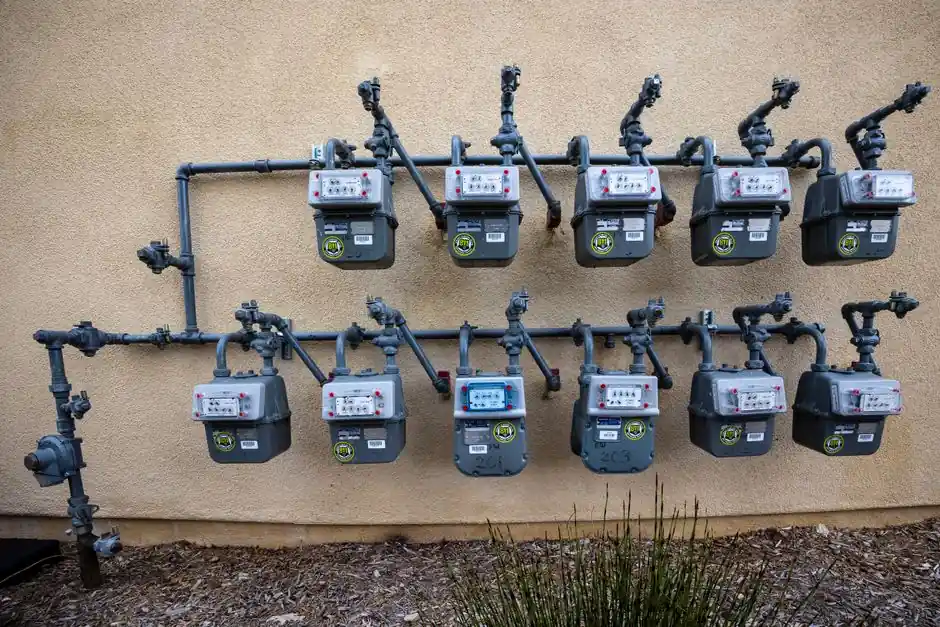
Our work in Downtown Kyle covers the full range: electronic gas leak detection, pressure testing, repair and replacement of corroded or damaged pipe, new gas line installation for remodels and additions, commercial kitchen gas service, meter and riser work, and pre-purchase or annual inspections. Every repair is pressure-tested before the system goes back into service, and every installation is planned around the fuel-gas code requirements that apply locally. Historic home or Main Street business — the goal is the same: a gas system you never have to think about.
Services available
Gas line repair services in Downtown Kyle
Downtown Kyle needs the same core gas services as anywhere else — but here they're shaped by the district's mix of historic homes, older commercial buildings, and constant renovation. Here's what we bring downtown, from Main Street storefronts to the residential blocks around the core.
Gas Line Repair
Repair work downtown usually starts with a symptom — a gas odor, a hissing meter, dying grass along the buried line — and ends with the failed section cut out and replaced. We trace leaks with electronic detection, confirm with pressure testing, and replace corroded or damaged pipe with code-compliant materials. In the district's older buildings we pay special attention to threaded joints and shutoff valves; in renovated spaces, to the places where new work tied into old.
Gas Line Installation
Adding a gas range, dryer, tankless water heater, or commercial cooking line? We design and install new gas lines sized for the appliance load, routed to code, and pressure-tested before anything gets connected. In downtown's older buildings we plan careful retrofit routes through attics, crawlspaces, and exterior walls that respect the structure and keep the system serviceable for decades.
Gas Leak Detection
If you smell gas or suspect a leak, detection is the first step — not guesswork. We use electronic gas detectors to pinpoint leaks at joints, valves, and buried sections, then verify with pressure testing to map the full extent of the problem. In downtown's expansive clay, leaks often hide where shifting soil has stressed a joint underground, and methodical detection is how we find them without tearing up the property.
How we work locally
How gas line repair is executed in Downtown Kyle
Challenge: Aging pipe in the historic core
Many buildings around downtown Kyle still carry gas piping installed generations ago — corroded threads, worn valves, and systems extended piecemeal through decades of renovations. What was adequate for a heater and a cookstove now feeds modern kitchens and commercial loads.
Challenge: Expansive clay under historic lots
Blackland Prairie clay swells in wet weather and shrinks in drought, and that movement works on buried gas lines year after year — loosening joints, stressing meter risers, and cracking older rigid pipe under downtown's narrow lots.
Where we work
Case files
Historic Main Street district
The owner of a Main Street commercial building noticed a faint gas odor near the back of the property, stronger on damp mornings — a classic sign of a small leak at a buried joint stressed by clay movement.
Electronic detection and a pressure test traced the leak to a corroded section of buried line where decades of soil movement had stressed an old threaded joint. We excavated carefully around the historic structure, replaced the failed section with code-compliant piping at proper depth with protective bedding, and checked the meter riser and accessible valves while we were there.
The system passed its pressure test, the odor was gone, and every appliance was relit and checked before the gas was turned back over to the owner.
A downtown home renovation
A homeowner renovating an older downtown house asked us to inspect the gas system before the new kitchen went in — a smart step that catches problems while walls are still open.
We found original piping with corroded threads, a valve that no longer seated, and a branch added years ago without proper sizing. We replaced the failing sections, brought the fittings into compliance, sized the new kitchen run correctly, and pressure-tested the entire system.
The renovation finished on a verified-tight gas system, with the new range and dryer connected to pipe sized for the actual load.
What gas line work in Downtown Kyle involves
Gas work shaped by historic buildings and clay
Downtown Kyle gives us the full spectrum of gas line work in a few square blocks: historic homes with original piping, Main Street commercial buildings with daily kitchen demands, and renovations that keep redrawing the map. The common thread is the Blackland Prairie clay — expansive ground that keeps buried lines under stress — and the age of the pipe itself. We've traced leaks to joints loosened by soil movement, replaced corroded steel in buildings older than the highways around them, sized commercial kitchen lines for real cooking loads, and verified renovation-era installations before the walls closed up. Every job follows the same discipline: find the real problem, fix it to code, pressure-test it, and leave the system safer than we found it.
Local questions
How do I know if my Downtown Kyle home has a gas leak?
Watch for a rotten-egg odor near the meter or appliances, hissing near a connection, dead vegetation along the buried line's path, or a gas bill that climbs without a change in usage. In older downtown homes, also note appliances that gradually underperform — it can signal a supply problem developing at an aging joint or valve. If you suspect a leak, avoid anything that could spark and have the system inspected with electronic detection equipment.
My downtown building has very old gas piping — should it be replaced?
Three reasons stack up in downtown's older buildings. First, the pipe itself: decades-old steel with corroded threads and worn valves. Second, the renovations: generations of additions, conversions, and new appliances tied into systems designed for far smaller loads. Third, the ground: Blackland Prairie clay that swells and shrinks with every wet-dry cycle, stressing buried joints year after year. Any one of these can cause a leak on its own; downtown's historic buildings often have all three, which is why regular inspection pays off.
Can you run gas to a Main Street commercial kitchen?
Yes. We size commercial gas lines for the real cooking load — ranges, fryers, and water heating running together — route them to code through older structures, and coordinate permits and inspections with the local authority. Work is scheduled to minimize disruption to the business, and every installation is pressure-tested before going into service.
Who do I call before digging on a downtown property?
Call Texas811 before any digging — in the historic core, old service routes, abandoned lines, and other utilities don't always sit where you'd expect. The marking service is free and required before breaking ground, and it's the simplest way to avoid turning a project into an emergency.
Workmanship & safety
Trust and compliance
Gas work leaves no room for shortcuts, so every job we do in Downtown Kyle is planned around the fuel-gas code requirements that apply locally. We pressure-test repairs before a system goes back into service, coordinate permits and inspections with the local authority having jurisdiction when the scope requires it, and relight and check every affected appliance before we leave. Gas utilities in Texas fall under the jurisdiction of the Texas Railroad Commission, and we follow its pipeline safety expectations on every job. Our technicians follow safety-first procedures on every call — from a simple valve replacement to a full commercial kitchen run — because the only acceptable outcome is a system that's verified tight and safe.
Areas we cover
Signs you need gas line repair in Downtown Kyle
You don't need to diagnose a gas problem yourself — that's our job. But knowing the warning signs helps you call early, when a small issue is still a small repair. If you notice any of these around your downtown home or business, get in touch and we'll investigate with proper detection equipment.
1. Gas odor inside or around the building
Natural gas is odorless, so utilities add a rotten-egg smell to make leaks detectable. If you notice it near your meter, along the buried line, or inside the building, treat it as urgent — especially if the smell is strong or growing. In a commercial kitchen, any gas odor during service deserves immediate attention.
2. Hissing or whistling near lines or the meter
A faint hiss at a joint, valve, or meter connection can mean gas escaping under pressure. Don't try to tighten aging fittings yourself — gas connections need proper tools and testing to be made safe.
3. Dead or dying vegetation along the buried line
A strip of stressed or dead grass following the path of your buried gas service is a classic sign of an underground leak. In downtown's clay soil, decades of shifting ground can stress joints enough to cause exactly this.
4. Higher gas bills with no change in usage
If your gas bill climbs while usage stays the same, a small leak or an inefficient appliance connection could be wasting gas. In older buildings, gradual increases often trace back to aging joints and valves.
5. Yellow, flickering, or sooty appliance flames
Gas appliances should burn with a steady blue flame. Yellow tips, flickering, or soot around burners can signal a supply or combustion problem — in commercial kitchens, this also affects food quality and safety.
6. A meter that has shifted or started leaning
After heavy rain or long drought, downtown's expansive clay moves — and it can shift meter risers and stress buried joints. If you see the meter leaning or soil pulling away from the riser, have it inspected before the next season moves it further.
Reliable gas line repair in Downtown Kyle
From historic homes near Main Street to the commercial kitchens that feed the district, Downtown Kyle needs gas line work that's careful and code-aware. If something doesn't smell — or sound — right, call us and we'll find the problem and fix it properly.
Request service