Gas Line Repair Kyle TX
Plum Creek gas line repair

Gas Line Repair in Plum Creek, Kyle, TX

Plum Creek is one of Kyle's signature master-planned communities — golf course fairways, winding trails, and rows of newer homes built for modern Texas living. Gas lines here do more than feed a range and a water heater: they run out to outdoor kitchens, fire pits, and grills that get used most of the year. We handle gas line repair, installation, leak detection, and inspection across Plum Creek, with work planned around the things that define this neighborhood — expansive Blackland Prairie clay, new-build construction, and outdoor living. If something smells off near your meter or an appliance stops behaving, call us and we'll track it down properly.

Kyle TX
Based in Kyle, Texas
Gas only
Dedicated line specialists
Safety-first work
Serving Plum Creek homes

About this area

Why gas line repair in Plum Creek matters

Why we serve here

Plum Creek pairs new-build homes with old Texas ground. Under the sidewalks and St. Augustine lawns lies Blackland Prairie clay — soil that swells in wet weather and shrinks in drought, moving everything buried in it year after year. That movement works on gas service lines, meter risers, and the joints where buried pipe turns up into the house. Add in the neighborhood's love of outdoor living — gas grills, outdoor kitchens, fire features — and you get gas systems with more branch lines, more connections, and more places that deserve a professional eye. We serve Plum Creek because master-planned comfort works best when the gas behind it is planned just as carefully.

Master-planned living, with gas lines to match

Most Plum Creek homes are newer construction, which means the gas piping itself is generally in good shape — but new doesn't mean trouble-free. Builder rough-ins don't always match the appliances a family actually wants, settling soil in the first years can stress fresh joints, and landscaping or irrigation projects sometimes find buried lines the hard way. The February 2021 freeze was a reminder that even newer Texas homes need their gas systems checked: exposed piping, outdoor runs, and meter assemblies all took a beating that week. Our work in Plum Creek covers the full picture — electronic leak detection, pressure testing, repair and replacement of damaged sections, new lines for outdoor living, and inspections that catch small problems while they're still small. Every repair is verified tight before the system goes back into service.
Services available

Gas line repair services in Plum Creek

Plum Creek homes ask a lot of their gas systems — indoor appliances plus the outdoor features that make Texas evenings worth living. These are the core services we bring to the neighborhood, each one planned around new-build construction, expansive clay soil, and the way families here actually live.

01

Gas Line Repair

Gas line repair in Plum Creek usually starts with a symptom — a faint odor near the meter, a hissing valve, dying grass tracing the buried line — and ends with the failed section found and fixed. We locate leaks with electronic detection, confirm them with pressure testing, and repair or replace the compromised pipe, valve, or fitting. In this neighborhood we pay special attention to joints stressed by clay-soil movement and to outdoor branch lines, which see more weather and wear than anything inside the house.

Learn more →
02

Gas Line Installation

Adding a gas range, dryer, tankless water heater, or outdoor kitchen in Plum Creek? We design and install new gas lines sized for the actual appliance load, routed cleanly through attics, walls, or underground to code, and pressure-tested before a single appliance is connected. For new-build homes we work from the builder's rough-in; for retrofit additions we plan routes that stay serviceable for decades. Permits and inspections are coordinated wherever the scope requires them.

Learn more →
03

Gas Leak Detection

If you smell gas or suspect a leak in your Plum Creek home, detection comes before guesswork. We sweep joints, valves, meter connections, and buried sections with electronic gas detectors, then use pressure testing to map the full extent of the problem. Because this neighborhood's clay soil can stress underground joints, we check buried runs methodically — finding the real leak without unnecessary digging.

Learn more →

How we work locally

How gas line repair is executed in Plum Creek

Challenge: Expansive clay soil moving buried lines

Plum Creek sits on Blackland Prairie clay that swells when wet and shrinks in drought. That seasonal heaving pushes and pulls on buried gas service lines, meter risers, and the joints where pipe turns up into the home — slowly loosening connections over the years.

Solution: We inspect exposed piping, meter risers, and accessible joints for stress and wear, then repair or replace affected sections with proper burial depth, bedding, and protection. Where the ground is known to move, we plan routes and supports that account for it instead of fighting it.

Challenge: Outdoor living additions tying into the main line

Fire pits, outdoor kitchens, and built-in grills are standard wish-list items in Plum Creek — but every new branch line is another connection that has to be sized, routed, and sealed correctly. Undersized or improvised tie-ins starve appliances and create leak points.

Solution: We size each new run for its appliance load, route it to code with proper protection underground, and pressure-test the whole system before anything is lit. The result is an outdoor setup that works the first time and stays safe for years.

Where we work

Near the golf courseNewer build phasesVillage shops areaAlong the trail corridorsEstablished blocksCommunity park edges

Where we work

Plum Creek

Kyle, TX 78645

Extract Directions

Case files

Illustrative scenario: 1

Step 1 — The call

Challenge

A homeowner in a newer Plum Creek home noticed a faint gas odor near the meter on damp mornings — the kind of small, intermittent sign that points to a joint stressed by shifting clay soil.

Execution

Electronic detection and a pressure test traced it to a buried joint where seasonal soil movement had worked a connection loose. The section was excavated with care, the joint renewed with code-compliant materials at proper depth and bedding, and the meter riser checked at the same time.

Impact

The system held its pressure test, the odor was gone, and every appliance was relit and checked before the gas was returned to service.

Illustrative scenario: 2

An outdoor kitchen addition

Challenge

A Plum Creek family wanted a gas line run to a new outdoor kitchen — grill, side burner, and fire pit — tied into the home's existing system without starving the indoor appliances.

Execution

We calculated the total appliance load, ran a new dedicated branch sized for all three outdoor features, routed it underground with proper depth and protection, and pressure-tested the entire system before the first burner was ever lit.

Impact

The outdoor kitchen fired up evenly on every burner, and the indoor appliances showed no change in performance — a sign the system was sized right from the start.

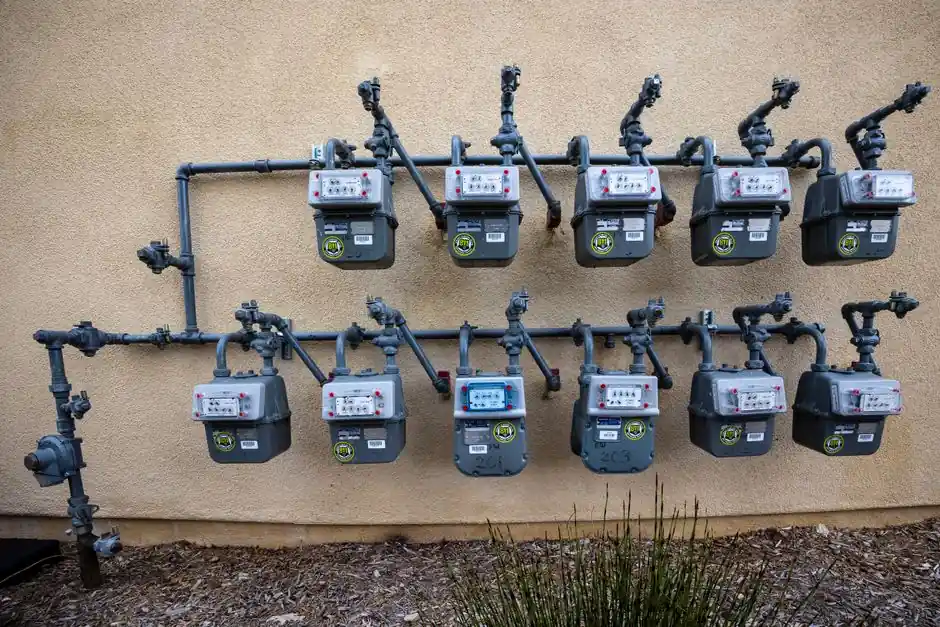
Gas meters mounted on the exterior wall of a Plum Creek home in Kyle, Texas.
Our focus
Our focus

What gas line work in Plum Creek involves

Common jobs in a master-planned community

Gas line work in Plum Creek has a recognizable pattern: leak detection on systems where clay soil has worked a joint loose, new branch lines for outdoor kitchens and fire pits, appliance hookups for ranges and dryers, and inspections after landscaping or irrigation projects cross a buried run. Newer homes mean the pipe is usually sound — the work is about connections, sizing, routing, and the slow effects of expansive ground. Every job follows the same discipline: electronic detection to find the real problem, repair or installation to code, a pressure test to verify it, and a final check of every affected appliance before we leave.

Gas only
Dedicated gas line specialists

Local questions

How do I know if my Plum Creek home has a gas leak?

The most common sign is a rotten-egg odor near the meter, around appliances, or out in the yard. You might also hear hissing near a connection, notice dead vegetation tracing the buried line's path, or see your gas bill climb without any change in usage. If you suspect a leak, avoid anything that could spark and have the system inspected with electronic detection equipment.

Does the clay soil in Plum Creek affect buried gas lines?

Yes. Plum Creek sits on Blackland Prairie clay, an expansive soil that swells when wet and shrinks in drought. That seasonal movement stresses buried gas lines and the joints where pipe meets the house or meter, gradually loosening connections over the years. Periodic inspection of buried runs and meter risers is the practical way to stay ahead of it.

Can you add a gas line for an outdoor kitchen or fire pit in Plum Creek?

Yes — outdoor living is a big part of life in Plum Creek, and we run new gas lines for grills, outdoor kitchens, fire pits, and pool heaters. Each line is sized for its appliance load, routed to code with proper underground protection, and pressure-tested before anything is connected. We also coordinate any required permits and inspections for the work.

Permits & oversight

Trust and compliance

Gas work in Texas sits under real oversight, and we plan every Plum Creek job around it. Where the scope requires it, we pull municipal permits and coordinate inspections with the local authority. Gas utilities in Texas fall under the jurisdiction of the Texas Railroad Commission, and we follow its pipeline safety expectations on every buried run. Before any digging, we call Texas811 so buried utilities are marked. And before any system goes back into service, it gets pressure-tested and every affected appliance gets relit and checked.

Work permits Pulled where the city requires them
Texas Railroad Commission State jurisdiction over gas utilities
Inspections & testing Pressure tests and code checks before service

Areas we cover

When To Call

Signs you need gas line repair in Plum Creek

You don't need to diagnose a gas problem yourself — that's our job. But knowing the warning signs helps you call early, while a small issue is still a small repair. If you notice any of these around your Plum Creek home, get in touch and we'll investigate with proper detection equipment.

1. A rotten-egg smell near the meter or in the yard

Natural gas is odorless, so utilities add a distinctive sulfur-like smell to make leaks detectable. If you notice it around your meter, along the buried line's path, or near an outdoor kitchen connection, treat it as urgent — especially if the smell is strong or growing.

2. Dead vegetation tracing a line across the lawn

A strip of stressed or dying grass following the path of your buried gas service is a classic sign of an underground leak. In Plum Creek's clay soil, seasonal ground movement can stress a buried joint just enough to let gas escape into the soil.

3. Hissing near lines, valves, or the meter

A faint hiss at a joint, valve, or meter connection can mean gas escaping under pressure. Don't try to tighten anything yourself — gas connections need proper tools, materials, and testing to be made safe.

4. A gas bill that climbs for no clear reason

If your gas bill rises while your usage stays the same, a small leak or an inefficient appliance connection could be wasting gas underground or behind a wall. A system inspection with detection equipment can find the cause.

5. Appliances behaving differently than usual

Burners with weak or yellow flames, a dryer taking longer than it should, or an outdoor grill that won't hold a steady flame can all point to a supply problem — a partially blocked line, an undersized branch, or a valve not opening fully. Worth having checked before it gets worse.

Local Problem Patterns

Common gas line repair problems in Plum Creek

Plum Creek's combination of new-build homes, expansive clay soil, and a serious outdoor-living culture produces its own pattern of gas line problems. These are the ones we see most often — and how we handle each.

Soil movement stressing buried joints

Why it happens here

Blackland Prairie clay swells and shrinks with every wet-dry cycle, and that movement works on buried gas lines year after year — loosening joints and stressing meter risers even in newer homes.

Our approach

We check buried runs and risers for stress and wear, renew compromised joints with proper depth and bedding, and plan supports and routing that account for ground movement.

Outdoor feature tie-ins done wrong

Why it happens here

Fire pits, outdoor kitchens, and grills added after move-in are sometimes tied into the house line without proper sizing or protection — starving appliances and creating leak points at the new connections.

Our approach

We calculate the real appliance load, resize or reroute the branch as needed, and pressure-test the whole system so indoor and outdoor appliances all get the gas they need.

Irrigation and landscaping strikes

Why it happens here

New planting beds, irrigation trenches, and fence posts go in constantly in a growing neighborhood — and buried gas lines don't always sit where you'd guess. A single shovel strike can nick or break a line.

Our approach

We locate the damage with detection equipment, repair the section to code, and verify the full run is tight. Before your next project, call Texas811 so buried lines get marked first.

Moisture and debris in low spots

Why it happens here

Low points in buried or exterior runs can collect moisture over time, and construction debris occasionally finds its way into open pipe during a project — both restrict flow to appliances.

Our approach

We isolate the affected section, clear it properly, and check the full run so the restriction doesn't come back.

What to expect

What to expect when you call

4 steps

From first call to finished job

Step 1 — The call

Tell us what you're noticing — a smell near the meter, a hissing sound, an appliance acting up, or plans for a new outdoor kitchen. We'll ask a few focused questions so the technician arrives with the right equipment and a clear starting point.

Step 2 — The visit

The technician inspects the meter, risers, accessible piping, and any buried runs in question, using electronic detection and pressure testing to find the real problem — not just the obvious symptom. You'll get a plain-language explanation of what's wrong and what the fix involves before any work begins.

Step 3 — The work

Repairs and installations are completed to code with proper materials, then pressure-tested to verify the system is tight. Every affected appliance is relit and checked, the work area is left clean, and you get straightforward guidance on what to watch for going forward.

Local Pricing

What affects gas line repair cost in Plum Creek

Every gas line job in Plum Creek is a little different, so costs depend on the specifics of your situation rather than a flat menu. The main cost factors are the extent of the problem, the materials the fix requires, and how accessible the line is. A short exposed repair near the meter is straightforward; a long buried run through expansive clay that needs careful excavation involves more labor and restoration. We diagnose first, explain exactly what the work involves, and give you a clear picture before anything begins — no surprises.

Scheduling in Plum Creek: We schedule gas line work around your availability and the urgency of the situation. Suspected leaks always take priority — if you smell gas, call right away and we'll talk through immediate safety steps while arranging the visit.

1

Extent of damage

A single loose joint is a different job than a full run of compromised pipe. The more pipe, fittings, and labor a repair requires, the more it costs — which is another reason early detection pays off.

2

Materials used

Code-compliant piping, proper fittings, protective coatings, and bedding material all affect the final cost. Cheaper shortcuts underground in clay soil tend to become expensive problems later.

3

Access and excavation

Lines under slabs, decks, driveways, or mature landscaping take more time to reach and restore than exposed runs. Careful excavation in expansive clay — and putting everything back the way it was — is skilled work that factors into the job.

Year-Round Coverage

How seasons affect gas line repair in Plum Creek

Central Texas weather doesn't sit still, and Plum Creek's clay soil amplifies every swing. Here's how the seasons interact with gas lines in this neighborhood — and what to watch for.

Spring

Spring storms saturate Plum Creek's clay, which swells and shifts around buried lines. Watch for soil pulling away from meter risers or fresh erosion gullies crossing where your gas service runs.

Tip

After the spring storm season, walk your property line and check that the meter riser is still plumb and buried runs still have cover.

Summer

Summer is peak outdoor-living season in Plum Creek — grills, outdoor kitchens, and fire pits all drawing gas at once. It's also when irrigation and landscaping projects are most likely to encounter a buried line.

Tip

Before summer entertaining season, have outdoor gas features and their supply lines checked, and call Texas811 before any digging project.

Fall

Fall is Plum Creek's maintenance window: milder weather and the right moment to inspect the system before heating season. Joints, valves, appliance connections, and outdoor runs all deserve a look.

Tip

A fall inspection catches the wear that summer's heat and soil movement left behind — joints, valves, and any line that shifted during the dry months.

Winter

Hard freezes are the real test. February 2021 showed every Texas homeowner what extreme cold does to exposed piping, outdoor runs, and meter assemblies. Draining and protecting outdoor gas features before a freeze matters.

Tip

Know where your main gas shutoff is before a freeze arrives, and make sure it actually turns. After a hard freeze, check outdoor connections for damage before firing everything back up.

Hiring Smart

Questions to ask before hiring gas line repair in Plum Creek

Gas work is safety work, so it's worth asking sharp questions before anyone touches your system. Here are five that separate careful contractors from careless ones.

  1. 1

    "How do you find the leak before you start digging?"

    Why it matters

    The answer should involve electronic detection and pressure testing — a diagnostic process, not guesswork. A contractor who digs first and looks later will cost you a torn-up yard.

  2. 2

    "Will you pressure-test the repair before putting it back in service?"

    Why it matters

    Every repair should be verified tight with a pressure test before gas flows again. If the answer is vague, keep looking.

  3. 3

    "Do you handle permits and inspections?"

    Why it matters

    Many gas line jobs in Kyle require a municipal permit and inspection. A good contractor tells you upfront when that's needed and coordinates it — not after the fact.

  4. 4

    "How do you protect my yard during excavation?"

    Why it matters

    Buried-line work means digging. Ask how they locate the line, how wide they dig, and how they restore landscaping, sod, and irrigation afterward — especially in a neighborhood where curb appeal matters.

  5. 5

    "What should I do if I smell gas right now?"

    Why it matters

    They should give you clear immediate steps: don't operate switches or appliances, leave the area if the odor is strong, and call from a safe distance. A contractor who can't answer this crisply isn't the one you want.

Knowing the Area

Landmarks and points of interest in Plum Creek

Plum Creek is easy to navigate once you know its anchors — the golf course at its heart, the village shops, and the trail corridors threading between neighborhoods. Our service routes run through all of it, from homes backing to the fairways to the newest phases on the edges.

Landmarks

  • The golf course

    Homes along the fairways were among the neighborhood's first — their gas systems are entering the years when joints and outdoor branch lines deserve a professional look.

  • Community parks and trails

    The trail corridors and park spaces that connect Plum Creek's phases make for easy landmarks when describing where a buried line runs on your property.

  • The village shops area

    The shops and dining near the neighborhood center anchor the commercial side of Plum Creek, with gas service behind the kitchens that serve residents.

Commercial Districts

  • Newer phases on the edges

    The newest streets in Plum Creek are still settling — literally. Fresh soil consolidation in the first years can stress new joints, which is why early inspections here pay off.

  • Everyday services nearby

    Grocery, dining, and services cluster along the corridors near the neighborhood, keeping daily life close to home.

Transport & Access

  • Kyle's main thoroughfares

    The main roads through Kyle connect Plum Creek to the rest of the city, so service visits don't depend on fighting highway traffic.

  • The I-35 corridor

    Sitting just off the I-35 corridor, Plum Creek is straightforward to reach from anywhere in the Kyle area.

More Kyle neighborhoods to explore

Plum Creek is one of ten Kyle neighborhoods we serve. If you're nearby — or just curious how gas line needs differ across the city — take a look at our other neighborhood pages.

Service Area

gas line repair Coverage Across Plum Creek & Hays County

Scheduled appointments for residents and businesses across Hays County, including the ZIP codes below.

7864078645Kyle, TX
!

Reliable gas line repair in Plum Creek

From the fairways to the newest phases, Plum Creek's gas systems work hardest where Texas living happens — the kitchen, the patio, the fire pit. If something doesn't smell or sound right, or you're planning an addition that needs gas, call us. We'll find the real problem, fix it to code, and prove it's tight before we leave.

Request service
Call Now: (512) 877-2446