Gas Line Repair in Creekside, Kyle, TX
Creekside is an established residential area of Kyle — tree-lined streets, homes with some history behind them, and the steady rhythm of a neighborhood where people put down roots. The gas systems here tell the story of that history: original piping in some homes, thoughtful upgrades in others, and remodels that added gas where it never ran before. As houses change hands and kitchens get renovated, the gas lines need the same attention the rest of the home receives. Gas Line Repair Kyle TX serves Creekside with gas line repair, installation, leak detection, and inspection — thorough, code-aware work for homes with a past and a future.
About this area
Why gas line repair in Creekside matters
Why we serve here
Creekside's homes have history, and history shows up in the gas lines — original piping meeting modern appliances, remodels that rerouted or extended service, and meter assemblies that have weathered years of Central Texas seasons. We serve this area by understanding what's actually in the walls and underground before we touch anything: inspection first, then a repair or installation plan built around what the house really needs.
Gas line care for Creekside's established homes.
Creekside grew up as Kyle grew up — a residential area of established streets where the homes have settled into their lots and their identities. Walk these blocks and you'll see the full spectrum: houses largely as built, houses mid-renovation, and houses where every room has been reimagined over the years. Gas lines follow the same pattern. Some homes still run on much of their original piping, sized and routed for the appliances of their era. Others have been updated piecemeal — a new range here, a converted dryer there, a water heater swapped out twice. Each change was sensible on its own, but the accumulation can leave a system that's part original, part retrofit, and due for a professional assessment.
Kitchen and laundry remodels are the most common reason Creekside homeowners call us. Moving a gas range across the kitchen, converting an electric dryer to gas, or upgrading to a tankless water heater all mean rerouting or extending gas lines — and doing it correctly means more than just getting gas to the new location. The line must be sized for the combined load of everything it serves, supported properly through framing, fitted with accessible shutoffs, and pressure-tested before the appliance ever fires. A remodel is also the ideal moment to bring older sections of the system up to current standards, since walls are open and access is easy. We plan gas work as part of the remodel, not as an afterthought to it.
Underground, Creekside's gas lines live in the same Blackland Prairie clay as the rest of Kyle — expansive soil that swells with rain and shrinks in drought, flexing every buried joint through the seasons. Over the years, that slow movement adds up. Add mature trees, whose roots probe for moisture and can press against buried lines, and the yard portion of an older gas system deserves real attention. We see the evidence in leaning meter risers, weeping joints, and the occasional dead stripe in a lawn tracing a buried leak. Texas811 locates before any digging — for fences, patios, or landscaping — keep a weekend project from becoming a gas emergency, and we insist on them.
Buying or selling in Creekside is another moment when gas lines matter. A pre-purchase inspection that includes the gas system can reveal undersized lines, aging materials, inaccessible shutoffs, or unpermitted past work — all things far cheaper to address during negotiations than after closing. Sellers benefit too: documenting that the gas system has been inspected and tested removes a question mark for buyers and their inspectors. We've made these inspections a regular part of our work in established neighborhoods, because the peace of mind they deliver is completely out of proportion to the effort involved.
Atmos Energy delivers gas to the meter throughout Kyle, and the February 2021 freeze reminded everyone in Central Texas that the homeowner's side of the meter needs winter readiness too. Exposed piping, older meter assemblies, and appliance connections that have seen years of service should be checked before cold weather, not during it. In an established area like Creekside, that seasonal check pairs naturally with the longer view: a gas system assessment every few years, prompt investigation of any odor or appliance irregularity, and professional planning whenever a remodel touches anything gas. The homes here were built to last — their gas systems should be maintained to match.
Services available
Gas line services in Creekside
Established homes need gas work that respects what's already there — careful diagnosis, remodel-ready reroutes, and upgrades that bring older systems up to today's standards.
Gas Line Repair
Repair work in Creekside often starts with a system that has evolved over the years: original piping joined to newer extensions, materials from different eras, and the cumulative effects of clay soil movement on buried joints. We diagnose with electronic detection and section-by-section pressure testing to find exactly what's failing — a corroded section, a stressed joint, a damaged yard line — then replace only what's needed with code-compliant piping. Every repair is pressure-tested before the system returns to service, and we document what was done for the home's records.
Gas Line Installation
From kitchen remodels to laundry conversions to outdoor living additions, installations in Creekside are about fitting new gas service into existing homes cleanly. We start with a load calculation covering every appliance the line will serve, then design routing that works with the home's framing and finishes — minimizing opened walls, keeping shutoffs accessible, and coordinating permits and inspections where the scope requires. Whether it's a range moved across the kitchen or a first-time gas line to a patio grill, the new work meets current code and is pressure-tested end to end.
Gas Leak Detection
Detection is the foundation of smart gas work in an established neighborhood. Our electronic detectors pinpoint leaks at joints, valves, meter assemblies, and buried sections, and pressure testing confirms whether a system holds. For Creekside homeowners, that precision means repairs target the actual failure instead of disturbing finished walls, mature landscaping, or concrete that doesn't need to move. A whole-system inspection before a remodel or a home purchase maps every line, tests every section, and tells you exactly where the system stands.
How we work locally
How gas line work gets done in Creekside
Challenge: Layered systems from years of changes
Decades of appliance swaps, remodels, and extensions leave many Creekside homes with gas systems assembled across eras — mixed materials, varying workmanship, and routing that made sense at the time but complicates today's work.
Challenge: Remodels that move gas appliances
Kitchen and laundry renovations frequently relocate gas ranges, dryers, and water heaters, which means rerouting lines through finished framing while the rest of the project races ahead around us.
Where we work
Case files
Pre-Purchase Gas Inspection
A buyer under contract on a Creekside home wanted the gas system checked before closing — the house had seen two kitchen updates and a water heater replacement over the years, with no records of the gas work.
We traced every gas run in the home, from the meter through the attic and walls to each appliance, documenting materials, routing, and shutoff locations. Pressure testing revealed a slow pressure drop isolated to the buried yard line serving a detached workshop, and one kitchen shutoff was buried behind cabinetry with no access. We provided a written findings report with prioritized recommendations, which the buyer used in negotiations; after closing, we returned to replace the failing yard section and relocate the shutoff to an accessible position, pressure-testing the full system on completion.
The buyer closed with full knowledge of the system's condition, the deficient sections were corrected to code, and the home's gas map is now documented for future work.
Kitchen Remodel Reroute
A Creekside family renovating their kitchen wanted the gas range moved to an island — requiring a new gas route through the slab and cabinetry while the remodel crew worked around us.
We designed the new route during the planning phase, calculating the load for the range plus the home's other gas appliances to confirm the existing line capacity. With the slab opened for plumbing, we ran the new gas line in a protected route to the island location, installed an accessible shutoff, and pressure-tested before the concrete was restored. Once the range was set, we connected it with a new supply line, leak-checked every joint, and test-fired all burners and the oven with the homeowner present.
The island range has a dedicated, correctly sized supply installed to code, the system passed pressure testing before finishes closed, and the remodel stayed on schedule.
Field notes from Creekside
Respecting the history in the walls
Working in Creekside has taught us that established homes reward patience. The gas system in a house with history can't be understood from a single glance at the meter — it has to be traced, tested, and mapped, because what was done in one decade affects what's possible in the next. We take that time. Remodels get gas plans drawn before demolition, not after; inspections look at the whole system rather than the single complaint; and repairs fix the actual failure instead of the symptom. Under it all, the same Central Texas realities apply: expansive clay working every buried joint, mature roots pressing through the soil, and winter cold finding any weakness in exposed piping. A neighborhood like Creekside doesn't need its gas systems replaced — it needs them understood, and that's the work we do here.
Local questions
How do I find gas line repair near Creekside, Kyle, TX?
Look for a contractor experienced with established homes — someone comfortable tracing older systems, working around remodels, and distinguishing a repair from a needed upgrade. Ask whether they map the full system before recommending work, use electronic detection and pressure testing for diagnosis, and coordinate with remodel timelines when walls are open. A contractor who wants to see the whole system, not just the symptom you called about, is the right fit for a neighborhood with history.
Do older gas lines in Creekside need to be replaced?
Not automatically — age alone isn't a verdict. What matters is condition: material, installation quality, soil movement effects, and whether the system meets current code and the home's actual appliance load. Some original piping we inspect is in fine shape; some newer retrofit work is not. That's why we test rather than assume. A pressure test and a full-system inspection tell you whether you're looking at targeted repairs, a planned upgrade during the next remodel, or a system that's simply in good health.
When should I call for emergency gas line help in Creekside?
Call immediately if you smell gas — that rotten-egg odor — anywhere in or around the home, hear hissing near the meter or an appliance connection, or notice dead vegetation tracing a line across the yard. In an established neighborhood, also watch for the subtler signs: a meter riser that's shifted, a pilot that won't stay lit, or a sudden change in how an appliance burns. If an odor is strong or indoors, leave, avoid sparks, and call your gas utility or 911 from a safe distance. For anything less urgent but still concerning, call us for detection and testing.
What affects the cost of rerouting a gas line during a Creekside remodel?
Access is the biggest variable — open walls and open slab make reroutes straightforward, while fishing a new line through finished framing takes more labor and care. Distance and obstacles matter: the length of the new run, what it passes through, and whether concrete or masonry is involved. The load calculation can change the scope too, since the line must be sized for everything it serves and the existing system must have capacity. Permits and inspections where required, pressure testing, and restoring finishes round out the project. Planning the gas work during the design phase, before demolition, keeps the scope — and the surprises — to a minimum.
Workmanship & safety
Working to code in Creekside
Gas piping safety in Texas sits under the jurisdiction of the Texas Railroad Commission, with local authorities issuing permits and performing inspections for work that requires them. We build every Creekside job around those requirements — repairs, reroutes, and new installations alike. Systems are pressure-tested before returning to service, permits are coordinated where the scope calls for them, and in an established neighborhood we take particular care to bring any deficient existing sections we touch up to current standards. The result is work that's verified tight, documented, and safe — whether the house is being remodeled or simply maintained.
Areas we cover
Signs you need gas line repair in Creekside
In an established neighborhood, gas problems often announce themselves quietly — a small change in how something works, a faint smell, a patch of lawn that won't thrive. Here's what to watch for in Creekside.
1. Gas odor in or around the home
That rotten-egg smell near the meter, in the yard, or inside the house means gas is escaping. In older systems, note whether the smell is near an appliance, along a buried run, or at the meter — the location helps us trace it faster.
2. Appliances behaving differently
A range burner that won't adjust properly, a water heater pilot that keeps going out, or a dryer taking longer than it used to can all trace back to fuel delivery. When an appliance changes its behavior, the gas supply deserves a professional look.
3. Hissing near the meter or connections
Escaping pressurized gas hisses or whistles. Check around the meter assembly, exposed piping, and appliance shutoffs — then leave fittings alone and call a professional.
4. Vegetation dying along a buried line
A narrow stripe of brown or struggling grass marking an underground gas route is a textbook buried-leak sign. In established lawns with mature root systems, an unexplained dead line is worth investigating rather than reseeding over.
5. A meter assembly showing its age
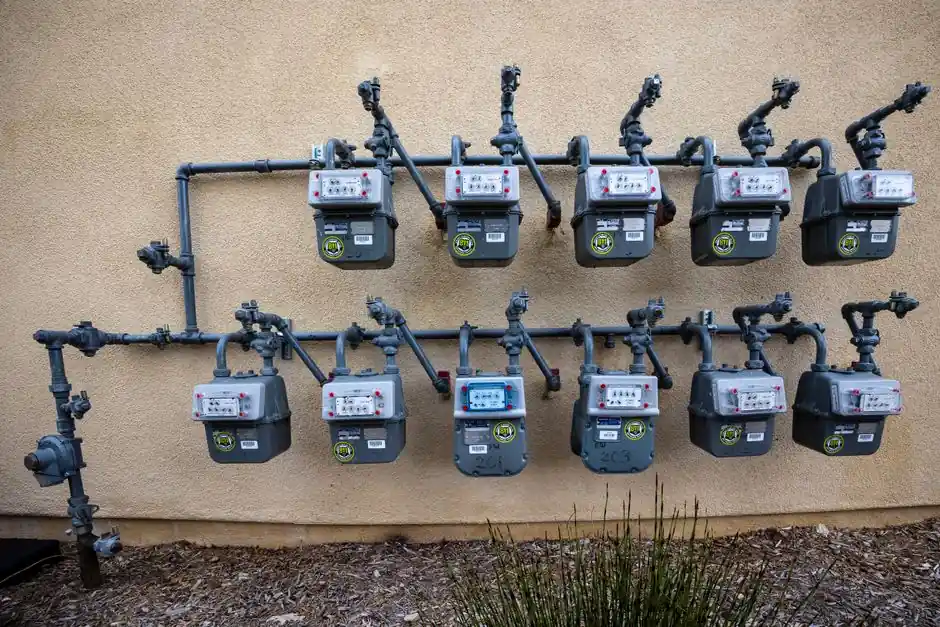
Corrosion on exposed piping, a leaning riser, stiff or frozen shutoff valves, and weathered fittings all suggest the meter assembly is due for service. These are the components that connect your home to the utility's system, and they take the weather head-on.
6. Unexplained increase in the gas bill
When usage habits haven't changed but the bill climbs, gas may be escaping through a small leak — or an appliance may be burning inefficiently. A system inspection with pressure testing will identify which it is.
Reliable gas line repair in Creekside
Creekside's established homes have earned their character, and their gas systems deserve the same thoughtful care the rest of the house gets. Whether it's a remodel that needs a reroute, an inspection before a purchase, or a repair that targets the real problem, call us. We'll take the time to understand your system — and leave it verified, documented, and safe.
Request service